GFRC Durability for Façades – The Enduring Architectural Material
1.What is GFRC and Why is It Durable?
GFRC (Glass Fiber Reinforced Concrete) is a composite material made from alkali-resistant (AR) glass fibers with a zirconia content ≥16%. These fibers are evenly dispersed within a cement, aggregate matrix, forming a fine internal reinforcement network that provides excellent tensile and flexural strength even at minimal thicknesses. The result is a lightweight, crack-resistant, dimensionally stable, and impact-resistant façade material.
The defining factor of its durability: GFRC contains no internal steel reinforcement, thus eliminating the most common cause of deterioration in conventional reinforced concrete: corrosion of embedded steel.

2. Durability Mechanisms of GFRC (Particularly for Façade Systems)
2.1. No Internal Corrosion Risk
GFRC uses AR-glass fibers instead of steel reinforcement in thin panels. These fibers do not rust.
As a result, chloride ion ingress and carbonation, two main causes of steel corrosion, cracking, and spalling, are no longer deterioration mechanisms within GFRC panels.
2.2. Dense Matrix and Low Permeability
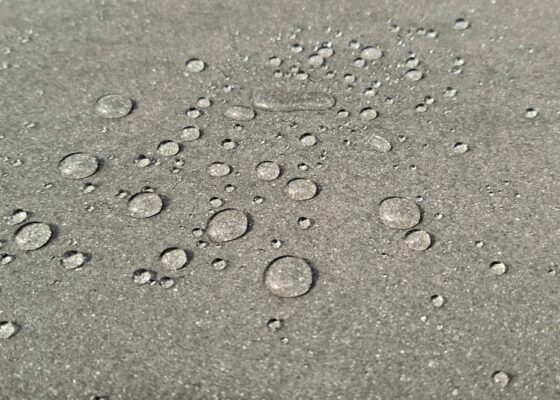
Designed with a low water-to-cement ratio (typically 0.30–0.35), GFRC develops a highly compact microstructure with minimal capillary porosity, low water absorption, and very low chloride/sulfate permeability. This effectively reduces risks of weathering, leaching, and freeze–thaw damage.
Additionally, Fcrete’s façade panels are treated with penetrating sealers that create a breathable one-way barrier, allowing internal moisture vapor to escape while preventing external water ingress. This enhances long-term surface performance, even under extreme environmental exposure.
2.3. Slow and Beneficial Carbonation
In GFRC, carbonation progresses very slowly (only a few millimeters over many years).
Since there is no steel present, carbonation does not trigger corrosion.
The gradual reduction in surface alkalinity can even densify the matrix over time, contributing positively to long-term durability.
2.4. Chemical Stability in Standard Environments
GFRC performs well in sulfate-, chloride-, and marine-exposed conditions.
Chlorides have no impact on the composite (no steel to corrode).
In high-sulfate environments, sulfate-resistant cement can be used per local standards.
Even in mild acid exposure, deterioration occurs very slowly due to GFRC’s low water–cement ratio and dense matrix.
2.5. Proven Performance Across Global Climates
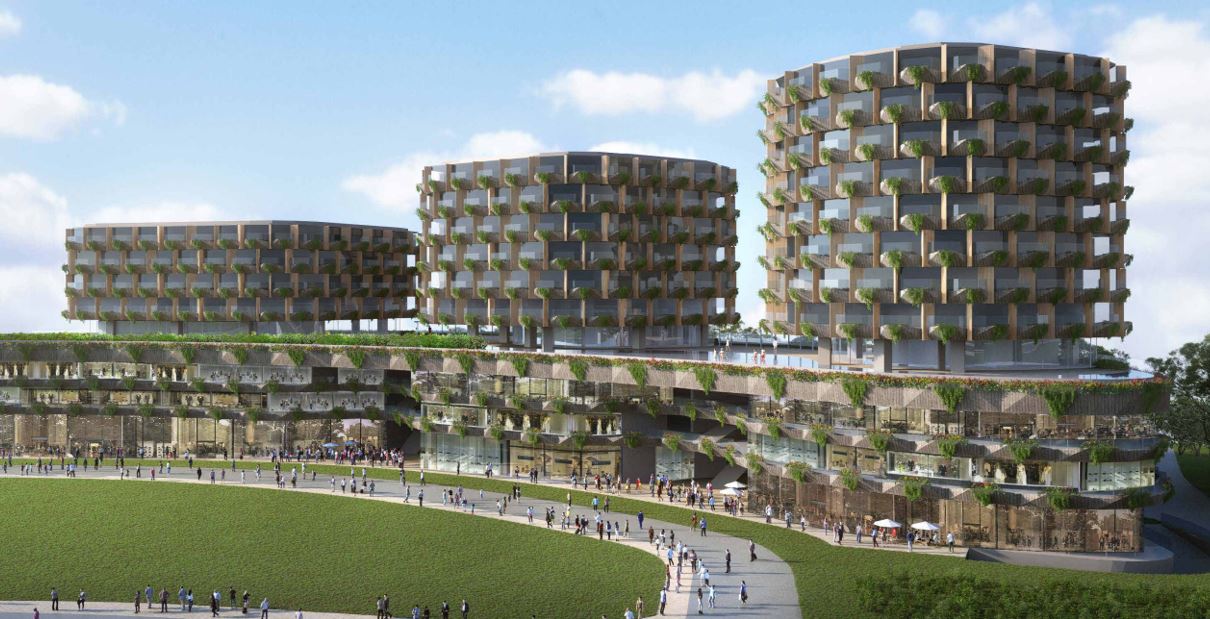
Over fifty years of use have demonstrated GFRC’s exceptional stability across diverse climatic zones, from polluted urban centers to humid coastal regions and cold freeze–thaw environments. Operating within temperatures from −20°C to +50°C, relative humidity above 90%, and high chloride exposure, Fcrete’s GFRC façades have maintained their appearance and integrity for decades without major refurbishment, when designed and installed to proper technical standards.
3. Design Life, Service Life, and the 100-Year Benchmark
• Design Life: The intended lifespan defined during design.
• Service Life: The actual period of use before major repairs are needed.
In EPD/LCA frameworks, conventional concrete is referenced with a 100-year design life.
Because GFRC shares a cementitious base but eliminates the internal corrosion mechanism, it is also qualified for a 100-year reference life when designed, produced, and detailed correctly.
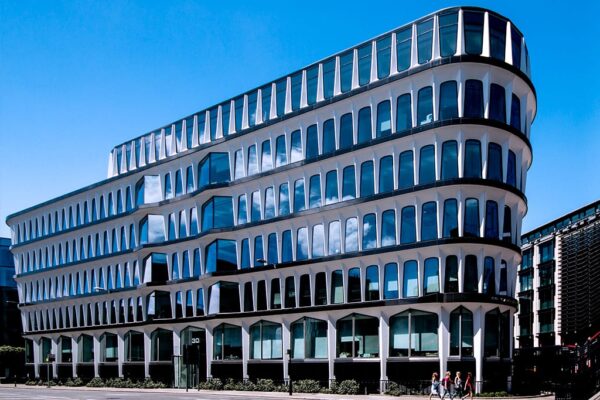
One of the earliest façade applications, 30 Cannon Street in London (1970s), remains intact today and is Grade II listed, serving as real-world evidence of GFRC’s long-term resilience.
4. Prerequisites for GFRC to Achieve Its Designed Longevity
4.1. Material Compliance
• AR-glass fibers with ≥16% ZrO₂ content (EN 15422, ASTM C1666).
• Non-reactive cement and aggregates; optimized polymer modifiers.
• Low water–cement ratio and controlled porosity.
4.2. Design and Detailing
• Account for thermal and shrinkage movements, wind, and seismic loads.
• Provide proper drainage and ventilation behind panels to prevent moisture retention.
• Use stainless steel or aluminum subframes suitable for chloride environments.
4.3. Manufacturing and Installation
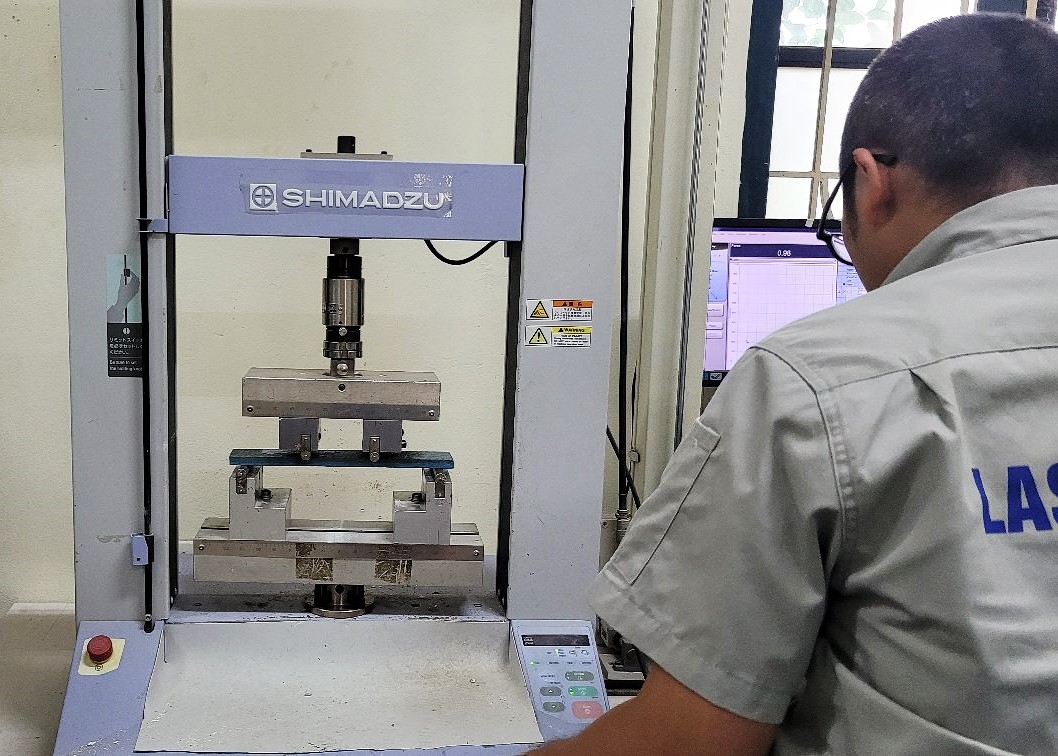
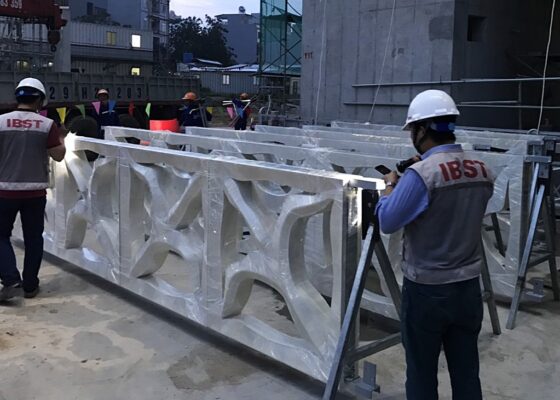
• Strict QC/QA procedures: panel thickness, fiber content, flexural strength, and freeze–thaw testing.
• Controlled curing; safe handling and installation to avoid localized stresses.
4.4. Maintenance
• Periodic inspection of mechanical fixings and surface cleaning.
• No heavy maintenance required when installed with watertight and ventilated façade systems.
5.Conclusion for Developers and Design Teams
Fcrete’s GFRC offers more than mechanical durability, it redefines longevity in modern architecture.
By eliminating the risk of steel corrosion, featuring a dense, low-permeability matrix, and maintaining chemical and dimensional stability over decades of exposure, GFRC has proven its reliability in some of the world’s most challenging climates.
When material specifications, detailing, and installation are executed to standard, Fcrete GFRC not only achieves a 100-year design life but also preserves the aesthetic and architectural identity of the building throughout its lifetime.